
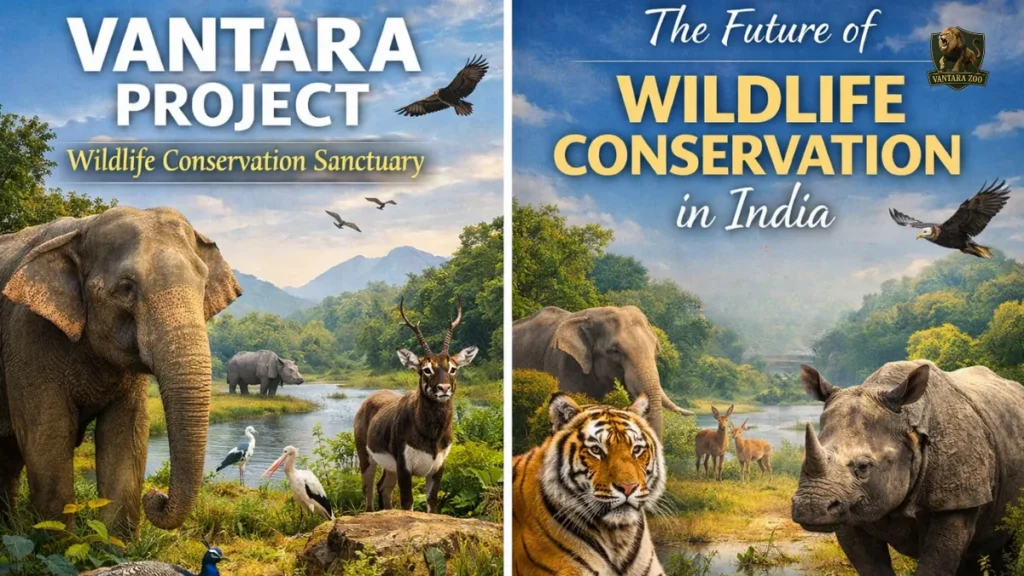
The Vantara project represents one of the most expansive and carefully structured wildlife conservation efforts ever undertaken in India, combining large-scale animal rescue, habitat restoration, veterinary science, and long-term ecological planning under a single vision. Conceived as a response to the growing pressures on wildlife caused by urbanization, climate change, illegal trafficking, and habitat fragmentation, the initiative aims to redefine how conservation is practiced in the modern era.
Located in Gujarat and developed with a strong emphasis on ethical care, scientific research, and sustainability, the Vantara project has gradually emerged as a subject of national and international discussion. Supporters view it as a landmark experiment in integrated conservation, while critics and observers continue to examine its scale, governance, and long-term impact. What is clear, however, is that the project has placed wildlife welfare at the center of a broader conversation about coexistence between humans and nature.
Understanding the Vision Behind the Vantara Project
At its core, the Vantara project is built around a simple but ambitious idea: to create a safe, controlled, and scientifically managed environment where rescued, injured, displaced, or endangered animals can recover, thrive, and, where possible, return to natural or protected habitats. The name “Vantara,” derived from Sanskrit, reflects the idea of a forest or sanctuary, symbolizing protection and renewal.
Unlike conventional zoos or wildlife parks, the initiative positions itself as a conservation and rehabilitation ecosystem rather than an entertainment-focused destination. The planning philosophy emphasizes minimizing human interference while maximizing animal welfare through naturalistic enclosures, advanced medical care, and behavioral enrichment.
The project also reflects a growing recognition that wildlife conservation today requires more than isolated forest reserves. It demands coordinated action involving veterinary science, genetics, climate resilience, legal frameworks, and community awareness. Vantara seeks to integrate these elements into a single operational model.
Geographic Location and Ecological Context
The Vantara project is situated within Gujarat, a state already known for notable conservation successes such as the revival of the Asiatic lion population. The location was selected based on several factors, including land availability, climatic suitability, and logistical access for large-scale infrastructure without disturbing existing protected forests.
The surrounding region includes semi-arid landscapes, grasslands, and managed green zones that can be adapted into species-specific habitats. Careful environmental assessments were conducted to ensure that water usage, waste management, and vegetation planning would not negatively affect surrounding ecosystems.
By situating the project outside traditional forest reserves, planners aimed to avoid displacement of existing wildlife while still creating a space large enough to host diverse species. This approach allows the project to function as a supplementary conservation hub rather than a replacement for national parks and sanctuaries.
Scale and Infrastructure Development
One of the most striking aspects of the Vantara project is its scale. Spread across thousands of acres, the facility includes multiple habitat zones, veterinary hospitals, quarantine areas, research centers, and logistical support infrastructure. Each zone is designed with a specific ecological and biological purpose.
Large mammals such as elephants, big cats, and herbivores are housed in expansive enclosures that replicate natural terrain, vegetation, and social structures. Smaller species, birds, and reptiles are maintained in carefully controlled environments that meet their thermal, dietary, and behavioral needs.
Infrastructure planning prioritizes long-term durability and low environmental impact. Renewable energy sources, water recycling systems, and waste treatment facilities form an integral part of daily operations. Roads and service pathways are designed to minimize noise and visual disturbance to animals.
Wildlife Rescue and Rehabilitation Efforts
A central pillar of the Vantara project is wildlife rescue. Animals arrive at the facility through various channels, including seizures from illegal trafficking, transfers from overcrowded or under-resourced facilities, and rescues following natural disasters or human-wildlife conflict incidents.
Upon arrival, each animal undergoes a detailed medical and behavioral assessment. Quarantine protocols are strictly followed to prevent the spread of disease. Veterinary teams then design individualized care plans that may include surgery, long-term treatment, physical therapy, and behavioral rehabilitation.
The goal of rehabilitation is not merely survival but quality of life. Animals that cannot be released into the wild due to injury, imprinting, or legal constraints are provided with lifelong care in environments that support natural behaviors and social interaction.
Veterinary Science and Medical Innovation
The Vantara project places significant emphasis on veterinary excellence. The on-site animal hospital is equipped with advanced diagnostic tools, surgical theaters, imaging facilities, and laboratories capable of handling a wide range of species.
Veterinary teams include specialists in wildlife medicine, surgery, pathology, nutrition, and reproductive health. Collaboration with national and international experts allows the project to adopt best practices and contribute to the broader scientific community.
Medical research conducted within the project focuses on disease prevention, treatment protocols for rare species, and innovations in animal welfare. Findings are intended to support conservation efforts beyond the project itself, benefiting wildlife care institutions across the region.
Species Diversity and Conservation Focus
The Vantara project accommodates a wide range of species, from large charismatic mammals to lesser-known but ecologically significant animals. This diversity reflects an understanding that conservation must extend beyond a few flagship species.
Big cats, including lions, tigers, and leopards, receive particular attention due to their ecological importance and vulnerability to poaching and habitat loss. Herbivores such as deer, antelope, and giraffes play a role in maintaining grassland ecosystems within the project.
Birds, reptiles, and amphibians are also included, with specialized facilities catering to their unique needs. By supporting a broad spectrum of life forms, the project contributes to genetic preservation and ecological balance.
Ethical Framework and Animal Welfare Standards
Ethics form the foundation of decision-making within the Vantara project. Animal welfare standards are guided by scientific research, international conventions, and continuous review by independent experts.
Human interaction with animals is carefully regulated. Enclosures are designed to allow animals control over their environment, including access to shelter, open spaces, and social groupings. Enrichment programs stimulate natural behaviors such as foraging, hunting simulations, and social play.
Transparency in animal care practices is emphasized through documentation, monitoring, and external audits. These measures aim to ensure that conservation goals do not compromise individual animal well-being.
Role of Technology in Conservation Management
Modern technology plays a significant role in the functioning of the Vantara project. Surveillance systems monitor animal movement and health indicators without intrusive methods. Data analytics help track feeding patterns, medical histories, and behavioral changes over time.
Geographic information systems are used to design habitats and manage vegetation. Climate monitoring tools support adaptive strategies to protect animals from extreme weather events.
Technology also aids in training staff, coordinating rescue operations, and sharing research findings. By embracing innovation, the project seeks to remain adaptable in a rapidly changing environmental landscape.
Community Engagement and Awareness
Although primarily a conservation facility, the Vantara project recognizes the importance of public awareness and community involvement. Educational initiatives aim to foster understanding of wildlife protection among local populations and the wider public.
Workshops, training programs, and outreach efforts focus on reducing human-wildlife conflict, promoting ethical treatment of animals, and encouraging sustainable practices. By involving communities, the project seeks to build long-term support for conservation goals.
Employment opportunities generated by the project also contribute to local economic development, reinforcing the idea that conservation and livelihoods can coexist.
Legal and Regulatory Oversight
Operating at such a large scale requires compliance with a complex framework of laws and regulations. The Vantara project functions under the supervision of relevant wildlife authorities and adheres to national and international legal standards.
Permits, inspections, and reporting mechanisms ensure accountability. Collaboration with government agencies helps align the project’s objectives with broader conservation policies.
Legal oversight also plays a role in determining which animals can be rehabilitated, relocated, or retained for lifetime care, ensuring that actions remain within ethical and legal boundaries.
Research, Data, and Knowledge Sharing
Beyond immediate animal care, the Vantara project positions itself as a knowledge hub. Research conducted on-site contributes to understanding animal behavior, disease management, and conservation strategies.
Partnerships with academic institutions enable data sharing and collaborative studies. Over time, these efforts are expected to inform policy decisions, improve wildlife management practices, and support conservation initiatives elsewhere.
By documenting successes and challenges, the project adds to the global conversation on how large-scale conservation can be managed responsibly.
Environmental Sustainability Measures
Environmental sustainability is integrated into every aspect of the project’s operations. Water conservation is achieved through rainwater harvesting, recycling, and efficient irrigation systems. Native plant species are prioritized in landscaping to support local biodiversity.
Energy needs are partially met through renewable sources, reducing the project’s carbon footprint. Waste management protocols ensure safe disposal and recycling of materials, including medical waste.
These measures reflect an understanding that conservation facilities must also protect the broader environment in which they operate.
Challenges and Criticisms
Like any large initiative, the Vantara project faces challenges and scrutiny. Questions have been raised about long-term sustainability, governance structures, and the balance between private initiative and public accountability.
Some critics express concern about concentrating large numbers of animals in a single facility, while others emphasize the need for continued transparency and independent oversight. Addressing these concerns requires ongoing dialogue, adaptive management, and openness to external evaluation.
The project’s leadership has acknowledged that conservation is an evolving field and that continuous improvement is essential.
Measuring Impact and Success
Assessing the success of the Vantara project involves multiple metrics. Animal health outcomes, survival rates, and behavioral indicators provide direct measures of welfare. Research output and knowledge dissemination reflect broader contributions to conservation science.
Long-term impact will also be measured by the project’s ability to support rewilding efforts, reduce pressure on natural habitats, and inspire similar initiatives elsewhere.
Success, in this context, is not a single outcome but an ongoing process of learning, adaptation, and commitment.
Comparison with Global Conservation Models
When viewed in a global context, the Vantara project shares similarities with large wildlife rehabilitation centers and conservation parks in other countries. However, its scale and integrated approach set it apart.
By combining rescue, research, and habitat management within a single framework, the project attempts to address multiple conservation challenges simultaneously. This model may offer valuable lessons for regions facing similar pressures on wildlife.
International collaboration and exchange of expertise further enhance the project’s relevance beyond national borders.
Future Plans and Long-Term Vision
Looking ahead, the Vantara project envisions expansion in both capacity and scope. Future plans include enhanced research facilities, increased collaboration with protected areas, and greater emphasis on species reintroduction where feasible.
The long-term vision extends beyond maintaining a single facility. It aims to contribute to a national and global network of conservation efforts, supporting policy development and public awareness.
Adaptability will be key as environmental conditions, scientific understanding, and societal expectations continue to evolve.
Key Components of the Vantara Project at a Glance
| Aspect | Description |
|---|---|
| Primary Purpose | Wildlife rescue, rehabilitation, and conservation |
| Location | Gujarat, India |
| Core Focus | Animal welfare, veterinary science, habitat management |
| Species Covered | Mammals, birds, reptiles, and amphibians |
| Operational Model | Integrated conservation and research facility |
| Sustainability Measures | Renewable energy, water conservation, waste management |
| Community Role | Education, employment, conflict mitigation |
| Research Output | Veterinary studies, conservation data |
Broader Implications for Wildlife Conservation in India
The emergence of the Vantara project reflects a broader shift in how wildlife conservation is perceived in India. As traditional habitats face increasing pressure, innovative solutions are needed to complement existing protected areas.
Private-public collaboration, scientific investment, and ethical oversight are becoming central to modern conservation strategies. The project illustrates both the potential and complexity of such approaches.
By sparking debate and attracting attention, it encourages society to reexamine its relationship with wildlife and the responsibilities that come with development.
Conclusion
The Vantara project stands as a bold and multifaceted attempt to address some of the most pressing challenges facing wildlife conservation today. Through its emphasis on rescue, rehabilitation, research, and sustainability, it seeks to offer a comprehensive response to threats that extend far beyond any single species or region.
While questions and challenges remain, the project’s scale and ambition have undeniably expanded the conversation around animal welfare and conservation in India. Its ultimate legacy will depend on transparency, adaptability, and continued commitment to ethical principles.
In an era marked by environmental uncertainty, initiatives like the Vantara project highlight the possibilities that emerge when resources, expertise, and long-term vision are aligned in service of protecting the natural world.