
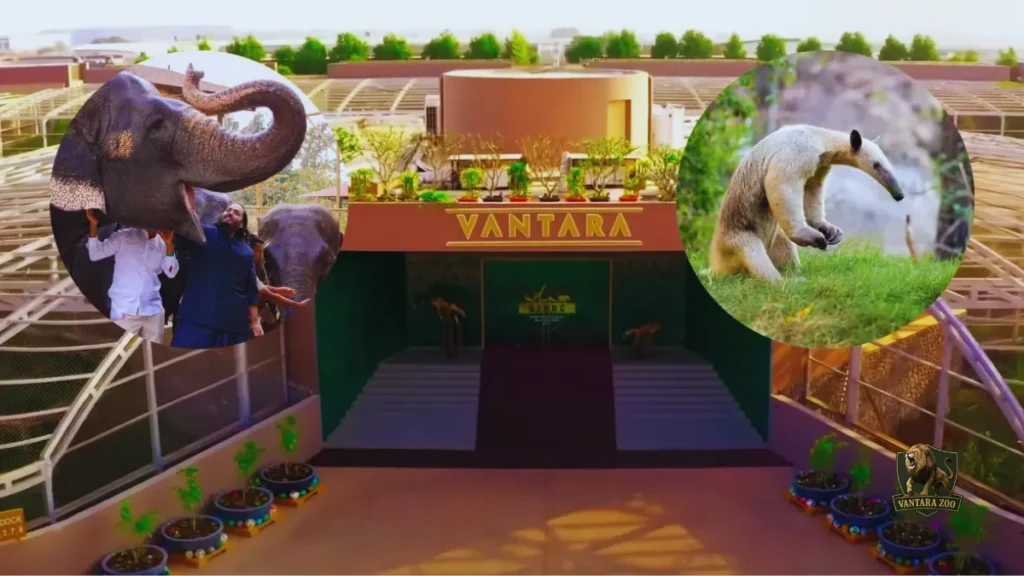
Vantara Zoo Jamnagar has emerged as one of the most talked-about wildlife initiatives in India, drawing attention not only for its scale but also for the philosophy that underpins its creation. Situated in the arid yet ecologically significant region of Jamnagar, Gujarat, the project represents a modern attempt to rethink how humans interact with wildlife-moving beyond entertainment toward long-term conservation, rescue, and rehabilitation.
Unlike traditional zoological parks that primarily function as public attractions, Vantara Zoo Jamnagar is positioned as a conservation-driven ecosystem. It seeks to address complex challenges such as habitat loss, illegal wildlife trade, human-animal conflict, and the rehabilitation of injured or displaced animals. The project has sparked national and international discussions about the future of wildlife care in densely populated countries like India, where conservation must coexist with development.
This article explores the origins, objectives, ecological design, animal care philosophy, and broader implications of Vantara Zoo Jamnagar, offering a detailed, journalistic look at what makes the initiative significant in the contemporary conservation landscape.
The Vision Behind Vantara Zoo Jamnagar
The word “Vantara” is derived from Sanskrit roots that broadly translate to “forest of life” or “path of the forest.” This name reflects the central idea behind the project: creating a space where animals can live with dignity, safety, and minimal stress, even when they cannot be returned immediately—or ever—to the wild.
The vision behind Vantara Zoo Jamnagar is rooted in the belief that conservation today must extend beyond protected forests and national parks. As urbanization, industrial expansion, and climate change place increasing pressure on natural habitats, many animals find themselves displaced, injured, or unable to survive independently. Vantara aims to serve as a refuge for such animals, offering long-term care rather than short-term containment.
From its earliest planning stages, the project emphasized scale, scientific input, and collaboration with veterinarians, wildlife biologists, and conservation experts. The goal was not merely to build enclosures, but to create a self-sustaining environment that mirrors natural ecosystems as closely as possible.
Jamnagar as a Strategic Location
Jamnagar’s selection as the site for Vantara was not accidental. Located on the western edge of India, the region features a unique mix of dry grasslands, scrub forests, wetlands, and coastal ecosystems. These diverse habitats provide a suitable foundation for housing a wide range of species, both native and non-native.
Gujarat has long been known for its conservation success stories, such as the revival of the Asiatic lion population in Gir Forest. Jamnagar itself is surrounded by ecologically important zones, including marine parks and bird sanctuaries. Establishing Vantara Zoo Jamnagar in this region allows it to integrate into an existing conservation culture while benefiting from relatively low population density compared to major urban centers.
The climatic conditions of Jamnagar also play a role. While summers can be harsh, the dry climate reduces certain disease risks, and the open landscape allows for the development of expansive enclosures designed to replicate natural movement patterns.
A Shift From Traditional Zoo Models
One of the defining aspects of Vantara Zoo Jamnagar is its departure from the conventional zoo model. Traditional zoos often prioritize visitor experience, with animals displayed in compact enclosures for easy viewing. Vantara, by contrast, emphasizes animal welfare over visibility.
Enclosures are designed to be large, landscaped habitats rather than cages. Natural vegetation, water bodies, and terrain variations are incorporated to encourage natural behaviors such as foraging, roaming, and social interaction. In many cases, animals are kept away from constant human presence to minimize stress.
The focus is on rehabilitation and lifelong care rather than performance or spectacle. Animals that are injured, rescued from illegal captivity, or displaced due to habitat destruction are given tailored care plans. The long-term objective, wherever possible, is eventual rewilding, though the project acknowledges that not all animals can return to the wild safely.
Animal Welfare and Ethical Framework
At the heart of Vantara Zoo Jamnagar lies a comprehensive ethical framework governing animal welfare. This framework is informed by global best practices, veterinary science, and ethical debates surrounding captivity and conservation.
Animals are grouped based on species compatibility, social structure, and individual behavioral needs. Special attention is given to rescued animals that may have experienced trauma, malnutrition, or abuse. Behavioral enrichment programs are implemented to stimulate mental and physical activity, reducing stress and stereotypical behaviors often seen in confined animals.
Veterinary care at Vantara is designed to be proactive rather than reactive. Regular health assessments, advanced diagnostic facilities, and specialized treatment units form a critical part of the infrastructure. Nutrition plans are customized for each species, with an emphasis on replicating natural diets as closely as possible.
Conservation Beyond Borders
While Vantara Zoo Jamnagar is located in India, its conservation outlook is global. Wildlife trafficking and habitat loss are international problems, and the project acknowledges that meaningful conservation requires cross-border cooperation.
Vantara works with wildlife authorities, rescue organizations, and conservation groups to support the relocation and rehabilitation of animals from various regions. This includes species that are endangered or vulnerable due to shrinking habitats, poaching, or conflict with humans.
By serving as a long-term care facility for animals that cannot be released immediately, Vantara helps relieve pressure on overcrowded rescue centers and sanctuaries. It also creates opportunities for research into animal behavior, health, and rehabilitation techniques that can be shared with conservation initiatives worldwide.
Scientific Research and Knowledge Building
Research forms a significant pillar of Vantara Zoo Jamnagar’s long-term strategy. The controlled yet naturalistic environments allow scientists to study animal behavior, social dynamics, and health in ways that are difficult in the wild but more ethical than traditional captivity.
Data collected through observation, health monitoring, and behavioral studies contributes to a growing body of knowledge about species-specific needs. This information can inform conservation policies, improve rescue and rehabilitation protocols, and support rewilding efforts elsewhere.
Importantly, research activities are designed to be non-invasive and aligned with animal welfare principles. The aim is not experimentation for its own sake, but knowledge that can improve outcomes for wildlife both within and beyond Vantara.
Education Without Exhibition
Public education is often cited as a justification for zoos, but Vantara Zoo Jamnagar approaches education differently. Rather than encouraging mass tourism, the project focuses on curated educational initiatives aimed at students, researchers, and conservation professionals.
Educational programs emphasize ecological literacy, ethical wildlife interaction, and the realities of conservation work. Visitors, where permitted, are guided through learning experiences that prioritize understanding over entertainment.
By limiting unnecessary foot traffic and focusing on structured educational engagement, Vantara seeks to avoid the pitfalls of commercialization that have historically plagued many wildlife institutions.
Community Engagement and Local Impact
No large conservation project can succeed without the support of local communities. Vantara Zoo Jamnagar recognizes this and integrates community engagement into its operational model.
Local residents benefit from employment opportunities, skill development programs, and educational outreach. Training initiatives help build local expertise in animal care, habitat management, and conservation science.
By involving nearby communities, Vantara aims to foster a sense of shared responsibility toward wildlife. This approach helps reduce human-animal conflict and builds long-term social support for conservation efforts.
Environmental Sustainability and Infrastructure
The physical infrastructure of Vantara Zoo Jamnagar reflects an emphasis on environmental sustainability. Water management systems, renewable energy integration, and waste reduction strategies are built into the project’s design.
Given Jamnagar’s semi-arid environment, water conservation is particularly important. Rainwater harvesting, recycling systems, and efficient irrigation methods are used to maintain habitats without placing excessive strain on local resources.
Landscaping prioritizes native plant species, which support local biodiversity and require less maintenance. These choices help create a resilient ecosystem that benefits both captive animals and surrounding wildlife.
Addressing Criticism and Ethical Questions
Any large-scale wildlife project inevitably attracts scrutiny, and Vantara Zoo Jamnagar is no exception. Critics question whether even the most well-intentioned facilities can justify keeping animals in controlled environments.
Vantara responds to such concerns by emphasizing necessity rather than choice. Many animals housed at the facility have been rescued from situations where survival in the wild is no longer possible without intervention. For these animals, long-term care in a managed environment may be the most humane option available.
Transparency, independent oversight, and adherence to evolving ethical standards are presented as safeguards against misuse or mission drift. The project positions itself not as a replacement for wild habitats, but as a complementary response to the realities of modern conservation.
Comparative Perspective: How Vantara Differs Globally
When compared to international wildlife sanctuaries and zoological institutions, Vantara Zoo Jamnagar stands out for its scale and integrated approach. While many sanctuaries focus on specific species or regions, Vantara operates across multiple ecosystems and taxonomic groups.
Its emphasis on rehabilitation, research, and long-term care aligns it more closely with conservation centers than traditional zoos. At the same time, its resources allow it to implement advanced veterinary and habitat management practices that smaller sanctuaries may struggle to afford.
This hybrid model places Vantara in a unique position within the global conservation ecosystem, bridging gaps between rescue operations, research institutions, and protected natural areas.
The Role of Policy and Regulation
Vantara Zoo Jamnagar operates within a complex regulatory environment governed by national and international wildlife protection laws. Compliance with these frameworks is essential to its legitimacy and effectiveness.
Coordination with government agencies ensures that animal transfers, medical interventions, and research activities meet legal and ethical standards. By working within established regulatory systems, Vantara seeks to strengthen rather than bypass existing conservation mechanisms.
The project also highlights the need for adaptive policies that recognize new conservation models. As wildlife challenges evolve, regulatory frameworks must balance protection, welfare, and scientific advancement.
Long-Term Goals and Future Outlook
Looking ahead, the ambitions of Vantara Zoo Jamnagar extend beyond its immediate operations. The project envisions itself as a center of excellence for wildlife care and conservation innovation.
Future plans include expanding research collaborations, enhancing training programs for conservation professionals, and supporting habitat restoration efforts beyond the boundaries of the facility. By sharing knowledge and resources, Vantara aims to amplify its impact far beyond Jamnagar.
The success of these goals will depend on continued ethical vigilance, scientific rigor, and public trust. Conservation is not a static achievement but an ongoing process that requires adaptability and accountability.
Read also: Vantara Project: Inside India’s Most Ambitious Wildlife Conservation Initiative
A Broader Reflection on Human Responsibility
Ultimately, the significance of Vantara Zoo Jamnagar lies in what it represents about humanity’s relationship with the natural world. In an era marked by environmental degradation and biodiversity loss, the project reflects an acknowledgment of responsibility.
It recognizes that human actions have contributed to the crises facing wildlife, and that humans must therefore play an active role in mitigation and care. While no single project can solve global conservation challenges, initiatives like Vantara offer models for how resources, science, and ethics can converge in meaningful ways.
Read also: Vantara Sanctuary: A Deep Exploration of India’s Evolving Model of Wildlife Care and Conservation
Key Facts About Vantara Zoo Jamnagar
| Aspect | Details |
|---|---|
| Location | Jamnagar, Gujarat, India |
| Core Purpose | Wildlife rescue, rehabilitation, and long-term care |
| Primary Focus | Animal welfare, conservation research, ethical management |
| Habitat Design | Large, naturalistic enclosures reflecting native ecosystems |
| Educational Role | Structured learning programs, limited public access |
| Conservation Scope | National and international wildlife support |
| Sustainability | Water conservation, native landscaping, renewable energy use |
Read also: Vantara Zoo Jamnagar: India’s Largest Animal Rescue and Conservation Project
Conclusion
Vantara Zoo Jamnagar represents a bold and complex experiment in modern conservation. By prioritizing animal welfare, scientific research, and ethical responsibility, it challenges traditional perceptions of what a zoo or sanctuary can be.
The project exists at the intersection of necessity and idealism-addressing immediate rescue needs while striving for long-term ecological balance. Its success will ultimately be measured not by visitor numbers or visual spectacle, but by the health, dignity, and outcomes of the animals in its care.
As debates about wildlife conservation continue to evolve, Vantara Zoo Jamnagar stands as a case study in ambition, responsibility, and the difficult choices required to protect life in a rapidly changing world.