
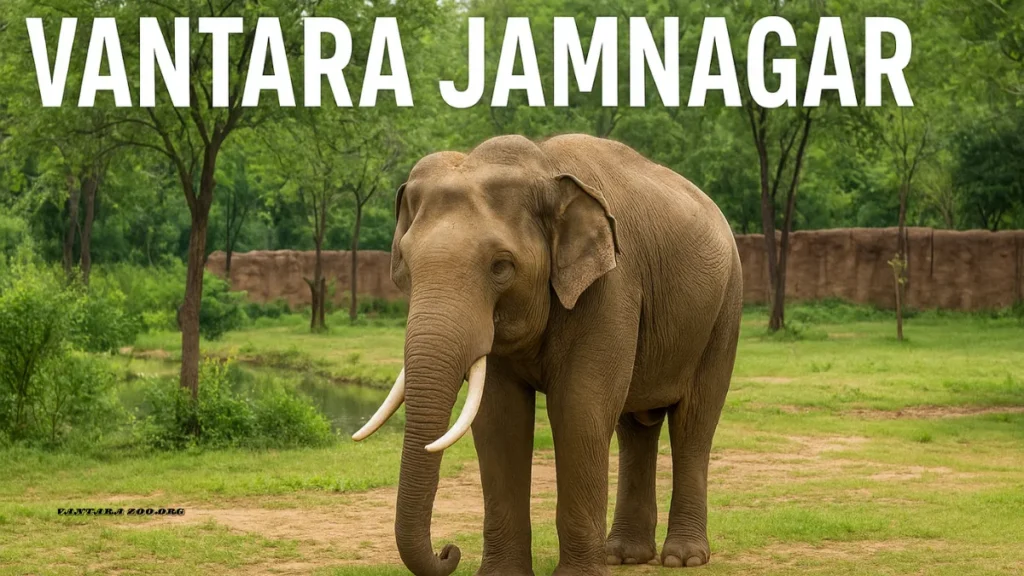
Vantara Jamnagar, the expansive wildlife rescue and rehabilitation initiative inside the Reliance Jamnagar Refinery Complex in Gujarat, is emerging as one of the most ambitious conservation projects ever attempted in India. Conceived and developed under the leadership of Anant Ambani, Vantara is designed to serve as a global benchmark for ethical wildlife care, scientific treatment, and high-standard rehabilitation practices.
Although the facility was formally inaugurated on February 26, 2024, it has not yet been opened to general visitors. With rising global interest, the question remains: When will Vantara Jamnagar open to the public?
Here is a complete and rewritten report covering the current status, features, facilities, area, project scale, and long-term vision of the centre.
Public Opening: When Will Vantara Jamnagar Welcome Visitors?
Even though the project has been officially launched, public entry has not begun yet. Anant Ambani confirmed during the unveiling ceremony that Vantara will allow visitor access at a later stage, once internal systems, animal comfort, and conservation protocols are fully aligned.
The management is currently developing structured visitor pathways and educational circuits so that public access does not interfere with the recovery and wellbeing of rescued wildlife. Until these mechanisms are finalized, Vantara remains a functional conservation and medical campus—not a tourism destination.
Why the Facility Is Not Yet Open to Visitors
Vantara is being prepared carefully, keeping animal protection as its highest priority. The decision to delay public access ensures:
- Smooth rehabilitation of newly rescued animals
- Testing of long-term safety and environmental systems
- Completion of public-friendly walking zones and guided route plans
- Staff readiness for large-scale visitor handling
- Avoidance of stress or disruption to recovering wildlife
The approach focuses on maintaining a peaceful environment until the facility achieves operational stability.
Inside Vantara Jamnagar: A Detailed Look at the Project
A 3,500-Acre Ecological Sanctuary
Spread across nearly 3,500 acres, Vantara Jamnagar is one of the world’s largest dedicated spaces for wildlife rehabilitation and preservation. Located within the Reliance Refinery ecosystem, the area has been carefully transformed with:
- Dense plantations
- Natural water bodies
- Climate-appropriate habitats
- Species-specific enclosures
The name “Vantara,” meaning “Star of the Forest,” symbolizes its mission to offer nurturing care to rescued animals in natural surroundings.
Cutting-Edge Facilities and Key Features
1. A Dedicated 600-Acre Elephant Habitat
One of Vantara’s most remarkable developments is its massive elephant care area. Designed to mimic forest environments, it includes:
- Open grazing fields
- Mud therapy and dust baths
- Hydrotherapy pools
- A specially designed elephant jacuzzi for arthritis treatment
- Rehabilitation and rest zones
The aim is to help elephants recover from years of captivity, injury, or mistreatment.
2. Sophisticated Elephant Hospital
Vantara houses one of the most advanced elephant medical facilities in India, equipped with:
- Hyperbaric oxygen therapy units
- Laser treatment systems
- Diagnostic laboratories
- Emergency treatment wards
- Observation and intensive care units
- Video conferencing tools for global veterinary collaboration
This hospital strengthens long-term medical support for rehabilitating elephants.
3. A 100,000 sq ft Multi-Species Wildlife Hospital
Beyond elephant treatment, Vantara’s 1 lakh sq ft wildlife hospital supports numerous species with advanced healthcare infrastructure, including:
- MRI and CT scanning units
- X-ray rooms
- Intensive care divisions
- Surgical theatres
- Rehabilitation wings
- Research laboratories
This facility plays a critical role in providing expert veterinary care and conducting ongoing medical research.
4. Scientifically Crafted Animal Enclosures
Wildlife enclosures in Vantara are constructed after in-depth behavioural studies. They feature:
- Freshwater bodies and natural ponds
- Temperature-controlled shelters
- Resting platforms and climbing structures
- Hydrotherapy facilities
- Species-specific environmental enhancements
These ensure rescued wildlife live in conditions that closely resemble their natural habitats.
5. Education, Training, and Research Collaboration
Vantara aims to become a major global centre for wildlife education and scientific study. It collaborates with:
- International wildlife experts
- NGOs
- Academic institutions
- Conservation scientists
The research division contributes to wildlife medicine, behavioural studies, and conservation technologies.
Animal Population at Vantara Jamnagar
Vantara continues to expand its rescue network across India. Currently, the facility is home to:
- Over 2,000 rescued animals
- More than 43 species, including
- Elephants
- Tigers
- Lions
- Leopards
- Herbivores
- Birds
- Reptiles
Many of these animals have been saved from trafficking, illegal captivity, circus backgrounds, or distress environments.
Project Cost and Funding
The total financial investment behind Vantara has not been officially disclosed. However, since it is backed by:
- Reliance Industries Limited
- Reliance Foundation
…it is widely believed that the cost runs into thousands of crores due to:
- Large-scale land development
- High-tech medical facilities
- International collaborations
- Long-term operational expenses
The project is clearly funded with a commitment to long-term wildlife welfare rather than commercial returns.
Visitor Fees and Ticket Prices
Because the facility has not yet opened to the public, Vantara has not announced:
- Ticket charges
- Booking systems
- Entry guidelines
- Tour formats
Once operational, the structure is expected to include:
- Guided educational tours
- Awareness and learning activities
- Limited-capacity visitor circuits
- Conservation-focused experiences
Pricing is likely to reflect the premium nature of the infrastructure and the non-commercial vision of the centre.
Official Website and Information
Vantara maintains official communication channels. However, visitors are encouraged to rely only on updates released by:
- Reliance Foundation
- Reliance Industries
- Verified press releases
- Recognized news platforms
This avoids confusion caused by unofficial websites or unverified sources.
The Vision Behind Vantara Jamnagar
The project is built on the principle of “Jeev Seva”, or compassionate care for all living beings. The broader goals include:
- Creating India’s most advanced wildlife rehabilitation ecosystem
- Working closely with the Central Zoo Authority of India
- Upgrading animal care infrastructure across Indian zoos
- Supporting endangered species conservation
- Encouraging scientific veterinary innovation
- Restoring ecological balance
- Promoting ethical and humane wildlife practices
For Anant Ambani, Vantara is not a commercial venture but a life mission dedicated to protecting vulnerable species and preserving biodiversity.
Also read: Vantara Wildlife Sanctuary: Revolutionising Compassionate Conservation Under Anant Ambani’s Vision
Global Importance of Vantara
Vantara is unique because it blends:
- Rescue
- Medical treatment
- Long-term rehabilitation
- Conservation science
- Public education
- Policy-level support
Its integrated approach is rare worldwide, and experts anticipate that Vantara could become:
- A global model for ethical wildlife rehabilitation
- A leading centre for veterinary research
- A vital hub for endangered species recovery
- A major contributor to conservation education
Once the public opening begins, Vantara is expected to draw global attention for its scientific excellence and compassionate philosophy.
Conclusion
Vantara Jamnagar represents a transformative step in India’s conservation journey. With its massive geographical scale, cutting-edge medical facilities, and mission-driven leadership, it is redefining how rescued animals are cared for and rehabilitated.
Although the public eagerly awaits its official opening, the project remains focused on creating a safe, thriving environment for wildlife and developing global partnerships that will shape conservation for decades to come.
When Vantara finally opens its doors, it will not only be one of the world’s largest wildlife centres but also a symbol of hope, healing, and the future of ethical wildlife care.