
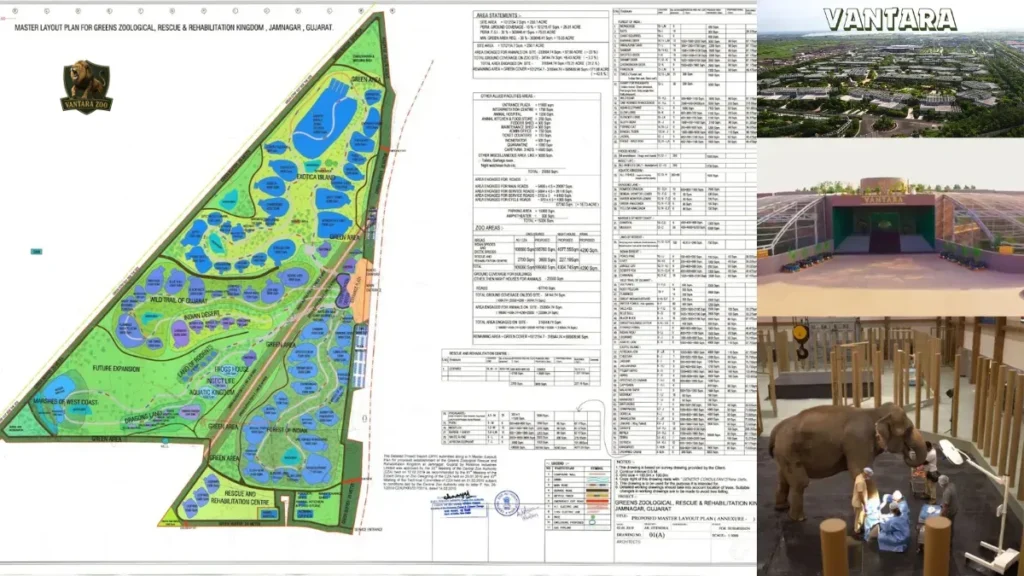
Vantara Map has emerged as an essential reference point for anyone trying to understand the scale, layout, and purpose of one of India’s most discussed wildlife conservation initiatives. As interest grows among researchers, journalists, environmentalists, and curious readers, the need for a clear and reliable explanation of how this conservation space is organized becomes increasingly important. A map, in this context, is not just a navigation tool but a visual narrative of planning, rehabilitation, and long-term ecological vision.
At its core, Vantara represents a large, carefully designed conservation and animal welfare project. The map associated with it helps explain how different zones are structured, how animals are housed and rehabilitated, and how natural landscapes have been integrated into the overall plan. Understanding this layout offers deeper insight into how modern conservation projects balance care, science, and sustainability.
What the Vantara Map Represents
The Vantara Map is a structured visual representation of the entire conservation area, highlighting key zones, facilities, and natural habitats. Unlike conventional tourist maps, its primary purpose is informational rather than recreational. It outlines how the project is divided into functional sections, each serving a specific role in animal care and ecological management.
Through this map, observers can see how rehabilitation centers, veterinary facilities, open habitats, water bodies, and forested areas coexist within a single coordinated framework. This clarity helps counter confusion and speculation by showing that the project follows a deliberate, planned approach rather than random development.
From a journalistic standpoint, the map also acts as a transparency tool. It allows independent observers to understand spatial priorities-where animals are kept, where medical care happens, and how human activity is separated from sensitive wildlife zones.
Why the Vantara Map Matters for Conservation Awareness
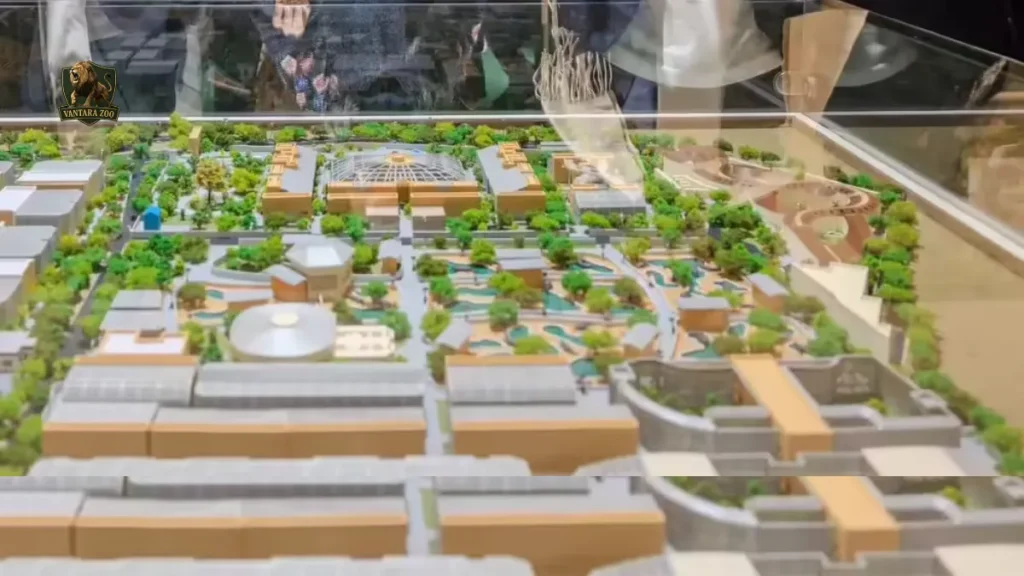
Large conservation projects often face questions about scale, impact, and intent. The Vantara Map plays a crucial role in addressing these concerns by visually explaining how land is allocated and used. It demonstrates that space is not merely occupied, but thoughtfully assigned based on animal needs, environmental considerations, and long-term sustainability.
For conservationists, maps like this help evaluate whether adequate buffer zones exist, how habitats are connected, and whether animal movement corridors are preserved. For policymakers and researchers, it provides a base layer for further ecological assessments and planning discussions.
Importantly, the map also helps the general public understand that conservation today is not limited to fencing animals in. Instead, it involves creating environments that replicate natural conditions as closely as possible while allowing for medical care and monitoring.
Key Zones Highlighted in the Vantara Map
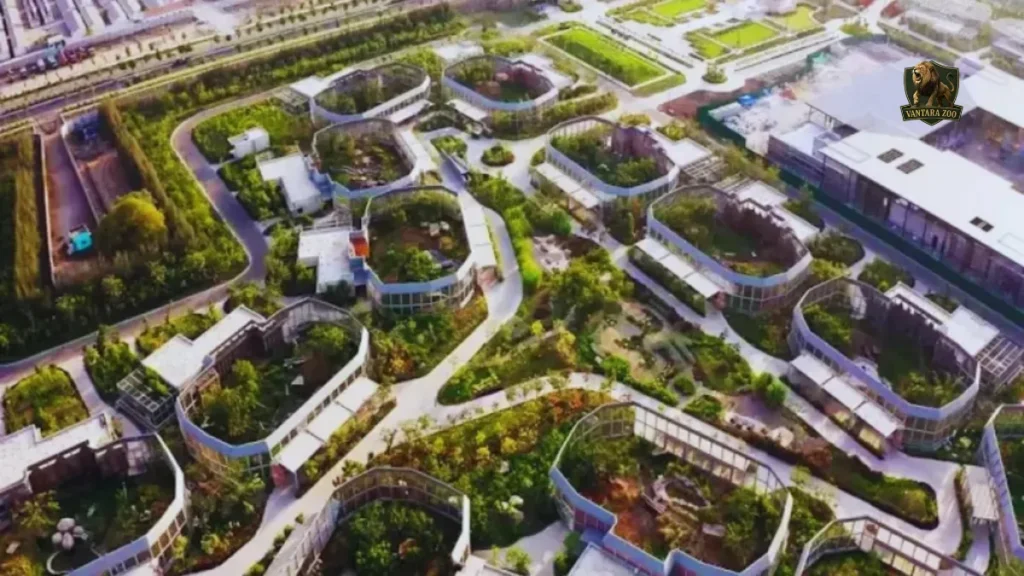
One of the strengths of the Vantara Map is how clearly it distinguishes between different functional areas. Each zone reflects a specific purpose within the broader conservation framework.
The map typically indicates rehabilitation zones where rescued or injured animals are initially housed and treated. These areas are often located away from public or administrative spaces to reduce stress on animals. Veterinary and medical facilities are usually marked separately, emphasizing their specialized role.
Open habitat zones form another significant component. These areas are designed to allow animals to move freely within protected boundaries, simulating natural behavior patterns. Forested sections, grasslands, and water bodies are also clearly demarcated, reinforcing the idea that habitat diversity is central to the project’s philosophy.
Understanding the Layout Through a Simple Table
The following table provides a simplified overview of how the main sections are generally represented in the Vantara Map and their primary functions:
| Section Name | Primary Purpose | Key Characteristics |
|---|---|---|
| Rehabilitation Zone | Initial care for rescued animals | Quiet areas, controlled access |
| Veterinary Facilities | Medical treatment and monitoring | Advanced equipment, trained staff |
| Open Habitat Areas | Long-term living spaces for animals | Natural vegetation, large enclosures |
| Forest and Green Zones | Ecosystem support and habitat continuity | Native trees, minimal human interference |
| Water Bodies | Hydration and natural behavior support | Ponds, streams, controlled water systems |
| Administrative Areas | Operations and management | Limited access, non-animal zones |
This structured layout helps readers visualize how different needs-medical, ecological, and operational—are balanced within a single conservation area.
Vantara Map as a Tool for Transparency
Transparency is a recurring theme in discussions around large-scale conservation efforts. The Vantara Map contributes to this by offering a clear, organized view of the project’s spatial planning. Rather than relying on abstract descriptions, the map shows how much space is dedicated to animal welfare versus infrastructure.
For journalists and independent analysts, such maps are valuable reference materials. They allow reporting to move beyond speculation and focus on verifiable spatial facts. When debates arise about land use or environmental impact, a well-documented map provides a common ground for discussion.
The map also supports educational outreach. Students and researchers studying wildlife management can use it as a real-world example of how modern conservation facilities are planned and executed.
How the Vantara Map Is Interpreted by Different Audiences
Different audiences read the Vantara Map in different ways. Conservation professionals may focus on habitat connectivity and animal movement potential. Veterinary experts might look closely at the placement of medical facilities relative to living zones. Environmental planners may analyze how green spaces and water systems are distributed.
For the general public, the map serves a more basic but equally important role: it simplifies a complex project. By breaking down the area into understandable sections, it helps non-specialists grasp the scale and intention behind the initiative without technical jargon.
This layered usefulness is what makes the map more than just a diagram. It becomes a shared reference point across disciplines.
Also read: Vantara Zoo Jamnagar: India’s Largest Animal Rescue and Conservation Project
The Broader Context of Mapping in Wildlife Projects
Maps have always been central to conservation, from early wildlife reserves to modern ecological corridors. The Vantara Map fits into this tradition by reflecting contemporary priorities such as animal welfare, environmental balance, and responsible land management.
Unlike older maps that focused mainly on boundaries, modern conservation maps emphasize function and flow-how animals move, how habitats connect, and how human activity is managed. In this sense, the map represents an evolution in how conservation spaces are designed and communicated.
Conclusion
As conservation projects continue to expand in scale and complexity, tools like the Vantara Map will become even more important. They allow projects to be understood, evaluated, and discussed in an informed manner. Clear mapping fosters accountability and encourages constructive dialogue rather than assumption-driven debate.
Ultimately, the value of the Vantara Map lies in its ability to translate an ambitious conservation vision into a format that is accessible, interpretable, and grounded in spatial reality. By studying it carefully, readers gain not just directions, but a deeper understanding of how modern wildlife conservation is being shaped in India today.